A conference with delegates from six countries sounds impressive until the first speaker begins and half the room reaches for headphones that do not work. Simultaneous interpreting makes multilingual events possible, but it depends on two things working together: skilled interpreters and reliable equipment. Organizers who plan both carefully give every participant the same access to the discussion, while those who treat interpreting as an afterthought often discover the problem at the worst possible moment. This guide explains how the service works and what to arrange before the event.
How Simultaneous Interpreting Works
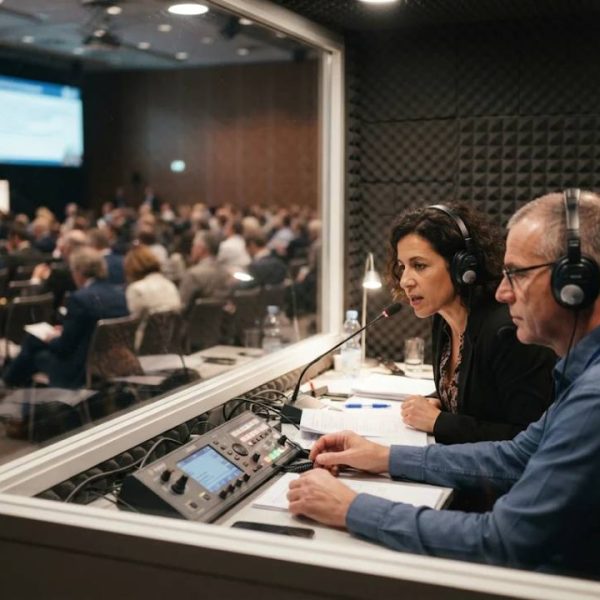
In simultaneous mode, interpreters listen to the speaker and render the message into another language almost at once, typically with a delay of only a few seconds. They sit in a soundproof booth, hear the floor through headsets and speak into a microphone, and delegates listen on receivers tuned to the language they need. Because the work demands intense concentration, interpreters work in pairs and swap every twenty to thirty minutes.
This is why a full day of meetings needs at least two interpreters per language, and why trying to save money with a single person almost always damages quality.
Consecutive and Whispered Options
Not every event needs booths. Consecutive interpreting suits small meetings, interviews and site visits, because the speaker pauses and the interpreter delivers the message afterward. Whispered interpreting, also called chuchotage, lets an interpreter sit next to one or two listeners and speak quietly, which is practical for a short visit or a board meeting with a single foreign guest.
Match the mode to the number of listeners and the length of the session, because the cheapest option on paper becomes the most expensive when it slows the program or confuses the audience.
What Equipment You May Need
A typical setup includes one or more interpreter booths, a console where interpreters select channels, microphones for speakers, a transmitter and receivers with headphones for delegates. Wireless infrared and radio systems each have strengths: infrared stays inside the room and is harder to intercept, while radio covers larger spaces and can pass through walls. Smaller events may use portable tour-guide systems instead of full booths.
Ask the rental company to test the system in the actual venue, since lighting, metal structures and other devices can affect signal quality.
Booking Interpreters in Spanish and Other Languages
Spanish is among the most requested conference languages, and organizers often need interpreters for both Latin American and European audiences. Choose professionals who know the vocabulary of your topic, whether it is finance, medicine or engineering. Agencies that also provide english to spanish translation can prepare written materials in the same terminology, so that slides, handouts and speech stay consistent.
Share names, titles and acronyms early, since proper nouns are the most common cause of hesitation in live interpreting.
Preparing Speakers
Speakers should send slides and notes to the interpreters a few days in advance, speak at a natural pace and avoid reading quickly from a script. Jokes, idioms and local references may need explanation, so speakers should expect the interpreter to simplify or adapt them. A short briefing before the opening session helps everyone understand the format.
Remind speakers to use the microphone every time, including during question time.
Choosing Between Interpreting and Translation
Organizers often confuse the two services. Interpreters deal with spoken language in real time, while translators work on written material with time to research and polish. Our short article on interpreter or translator explains the difference with practical examples. Many events need both: interpreters for the sessions and translators for programs, signs and follow-up reports.
Plan both budgets at the start to avoid surprises.
Written materials for a conference often include technical content, from product specifications to safety instructions, and those need a different treatment from spoken interpreting. A provider of technical translation services can prepare the slides, handouts and follow-up reports in the same terminology the interpreters use in the booth. That consistency helps delegates who read the handout after the session and need the same wording they heard live. Booking the written translation together with the interpreting team also avoids a last-minute scramble for a separate supplier.
Professional Standards and Ethics
Qualified conference interpreters follow codes of conduct covering confidentiality, accuracy and impartiality. Professional bodies such as the International Association of Conference Interpreters publish guidance on team size, working hours and booth standards, which organizers can use as a reference when drafting contracts.
Insist on written confirmation of the interpreter team, working hours and cancellation terms.
Budgeting and Timelines
Costs depend on languages, number of days, equipment, technician support and travel. Request quotes at least six to eight weeks before an event, and earlier for rare language pairs or peak seasons. Ask for a breakdown that separates interpreter fees, equipment rental, technician time and transport.
A clear budget helps you compare offers fairly and avoid hidden charges.
A Checklist for the Event Day
Arrive early for a sound check, confirm that every booth has a working microphone, water and a clear view of the stage, and place receivers at the entrance with simple instructions. Assign a staff member to help delegates who struggle with the headsets, and keep a technician on site until the last session ends.
Collect receivers at the exit and count them before guests leave.
After the Event
Ask participants whether they could follow every session, and share feedback with the interpreting team and the equipment supplier. Recordings, if agreed in advance, can be used for transcripts and training material. Keep notes on what worked so that the next event is smoother.
Good records turn one successful event into a repeatable process.
Final Thoughts
Simultaneous interpreting and professional equipment turn a language barrier into a shared experience. Plan early, choose qualified teams, test the technology and brief speakers.
The result is an event where everyone is heard and understood.
Remote and Hybrid Events
Many conferences now combine a room audience with online participants. Remote simultaneous interpreting platforms let interpreters work from separate locations while delegates choose a language channel on their screen. Test internet speed, provide interpreters with a backup connection and agree on how questions from the online audience will be handled.
Hybrid planning needs a technician who understands both the room system and the online platform.
Accessibility for All Participants
Think beyond spoken languages. Sign language interpreters, live captions and printed summaries help participants who are deaf, hard of hearing or less comfortable with fast speech. Place interpreters where they are visible, and provide good lighting. Ask registrants about their needs in the booking form.
Inclusive planning improves the experience for everyone in the room.
Sound Quality and Interpreter Comfort
Clear audio is the foundation of every good interpretation. Interpreters need a quiet booth, a reliable headset, a microphone for the speaker that is placed at the right distance and a monitor or window that shows the room. Poor sound makes the work tiring and increases the risk of missed words. Ask the technician to run a full sound check with every speaker before the doors open, and keep a backup microphone ready.
Comfort matters too. Provide water, enough light to read notes and a short rest between sessions, since fatigue lowers accuracy faster than most people expect.